Crumbling Rocks as Spiral
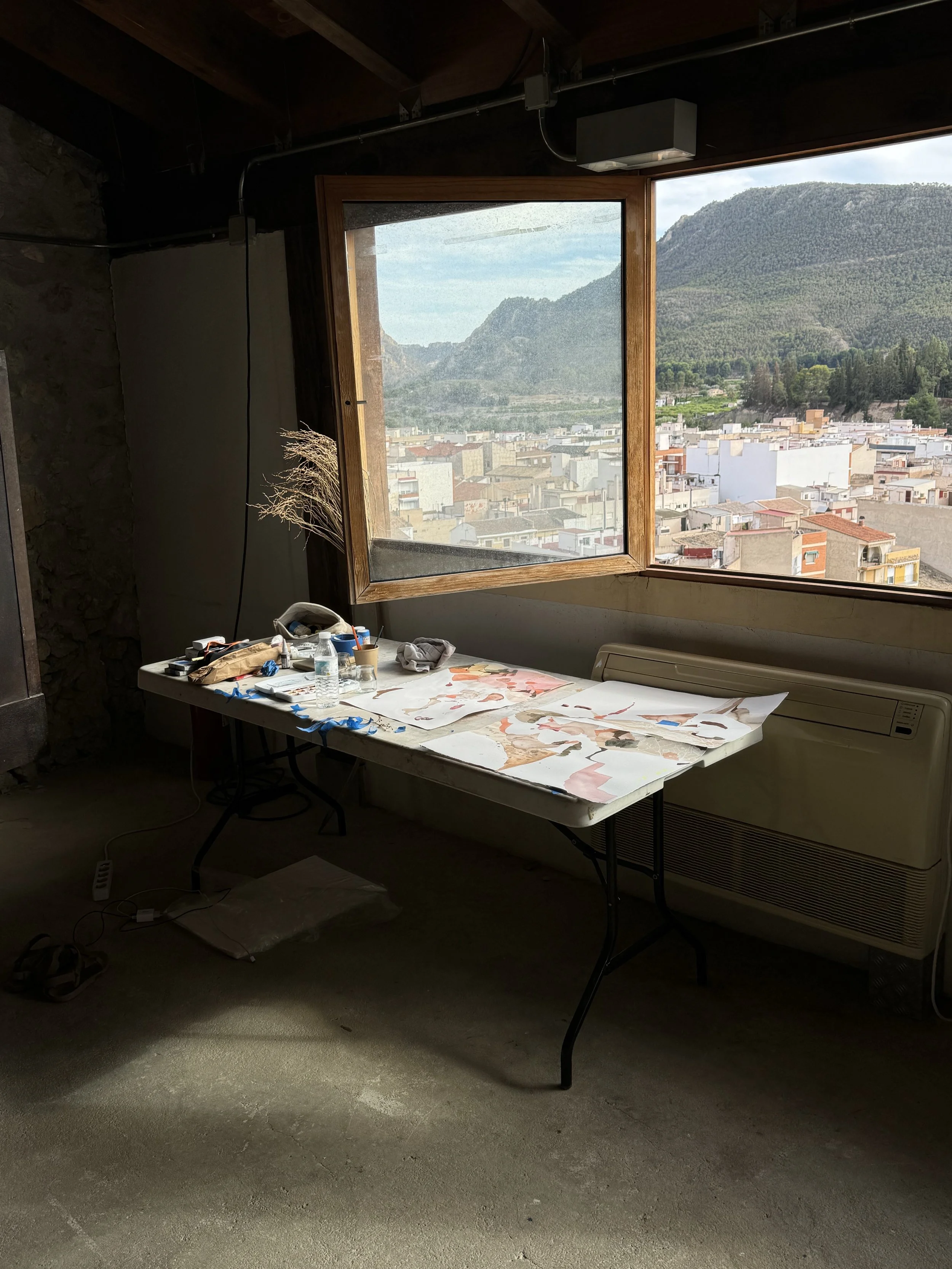
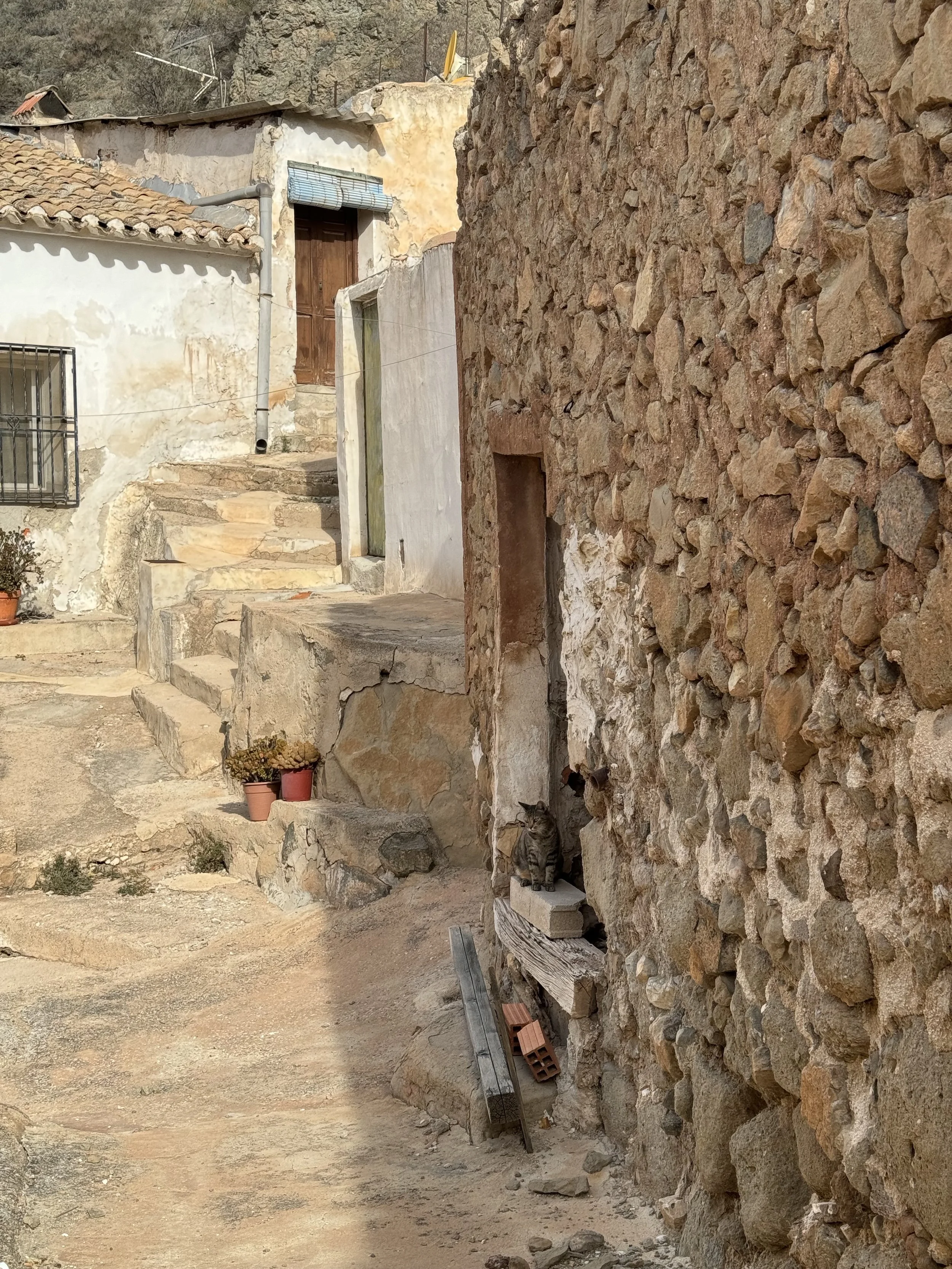
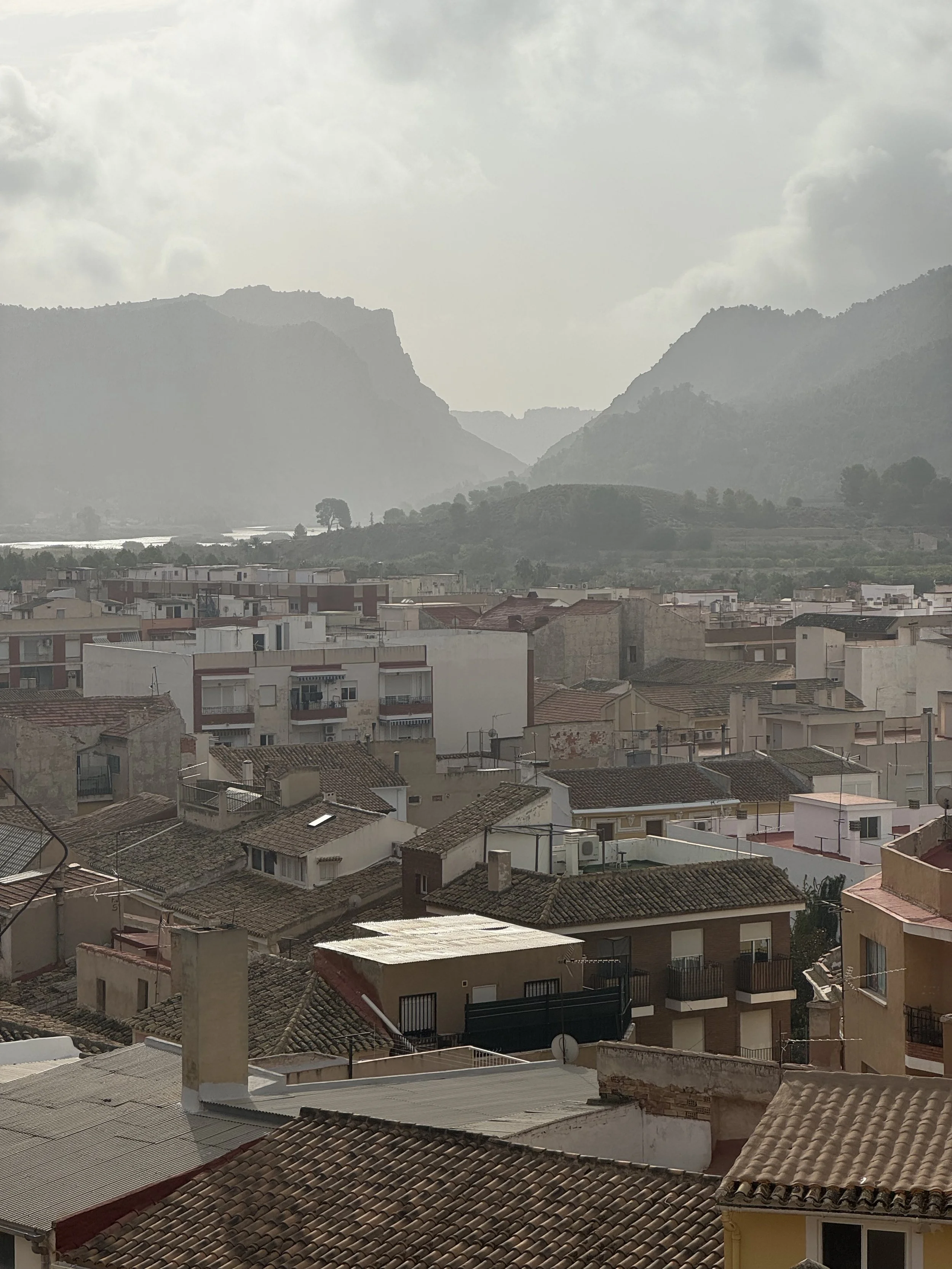
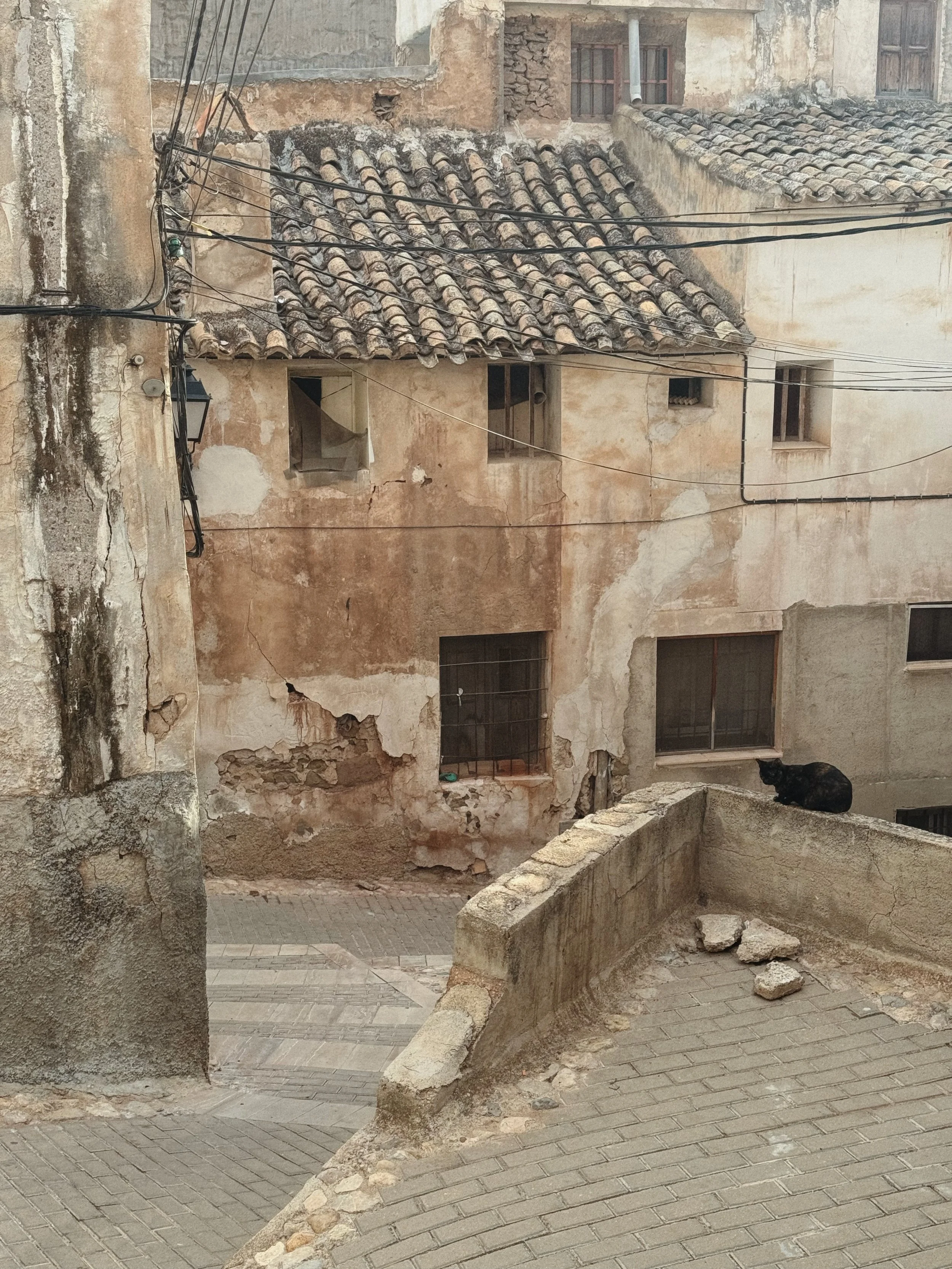
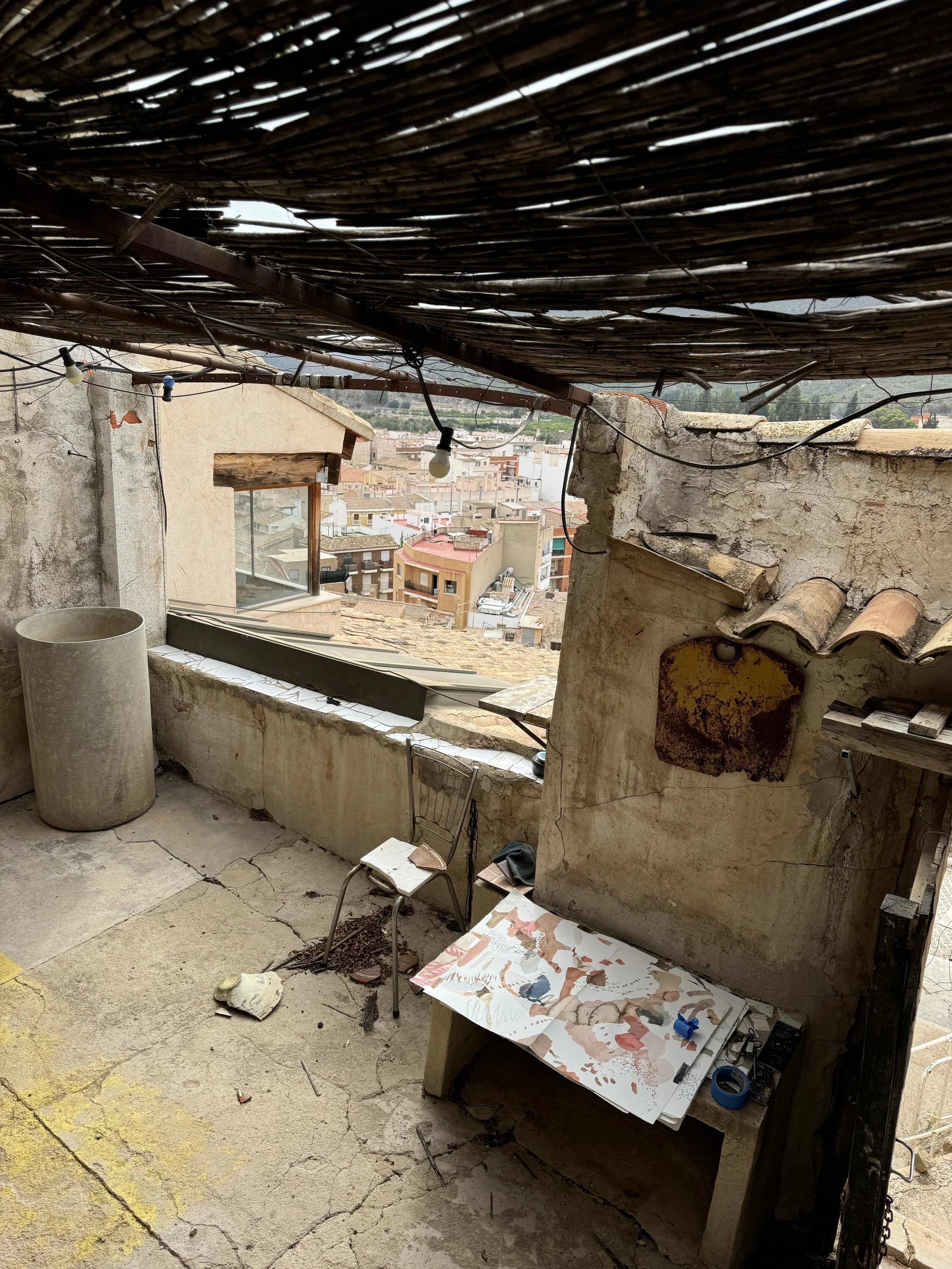
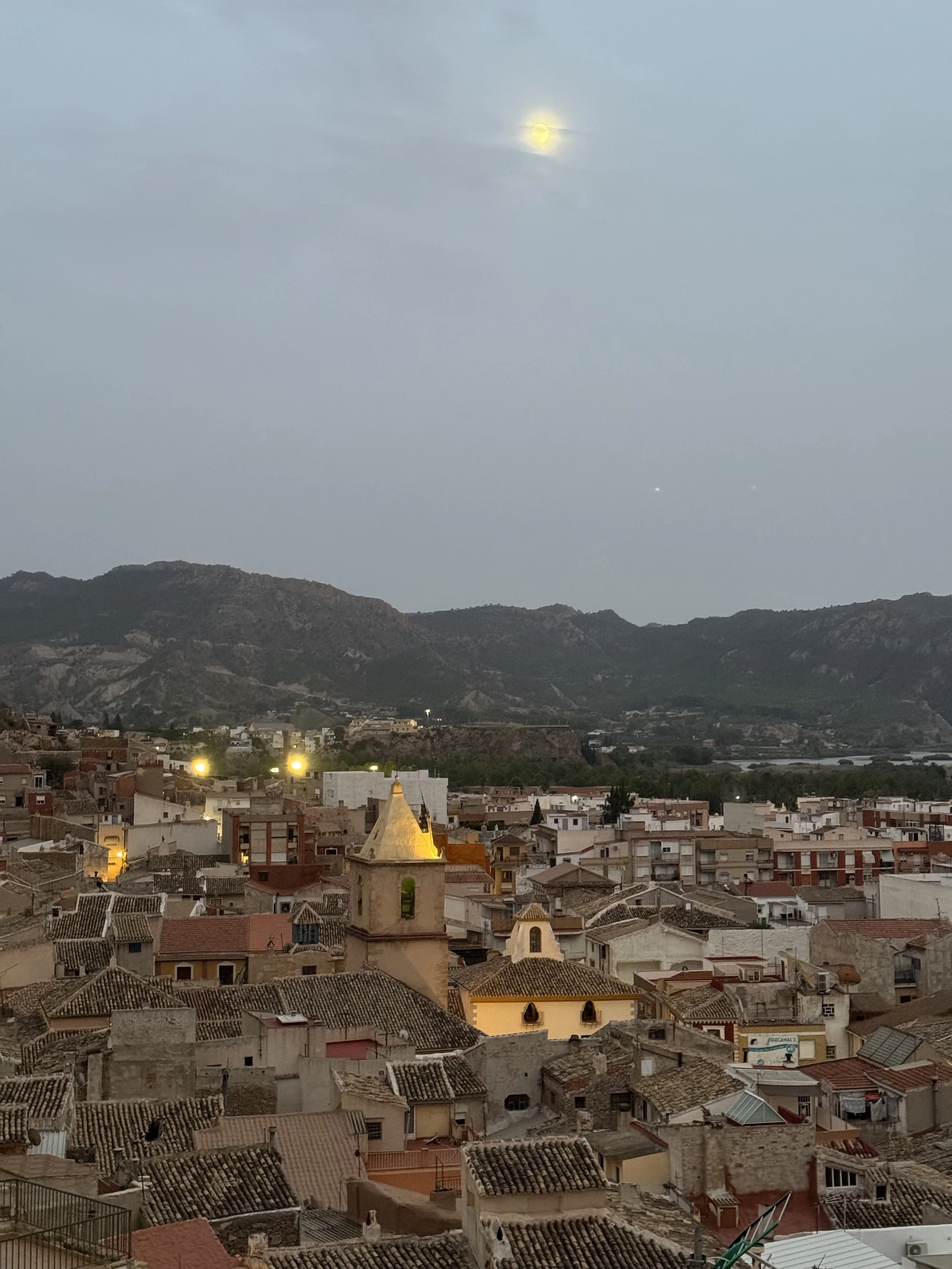
From a vantage point up on the hillside, the world seems disinterested in being rushed or hurried. There is is particular stillness that comes from the hot Spainish sun. It magnified the smallest of movements: the black and white cat jumps down from the roof.
The quiet is interrupted every 15 minutes by the church bells and the occasional motorbike that burns like a chainsaw up the street. The salt flats provide an amphitheatre for the crickets to imitate the creaking of screen doors. And the buzzing flies remind me that I need to take a shower.
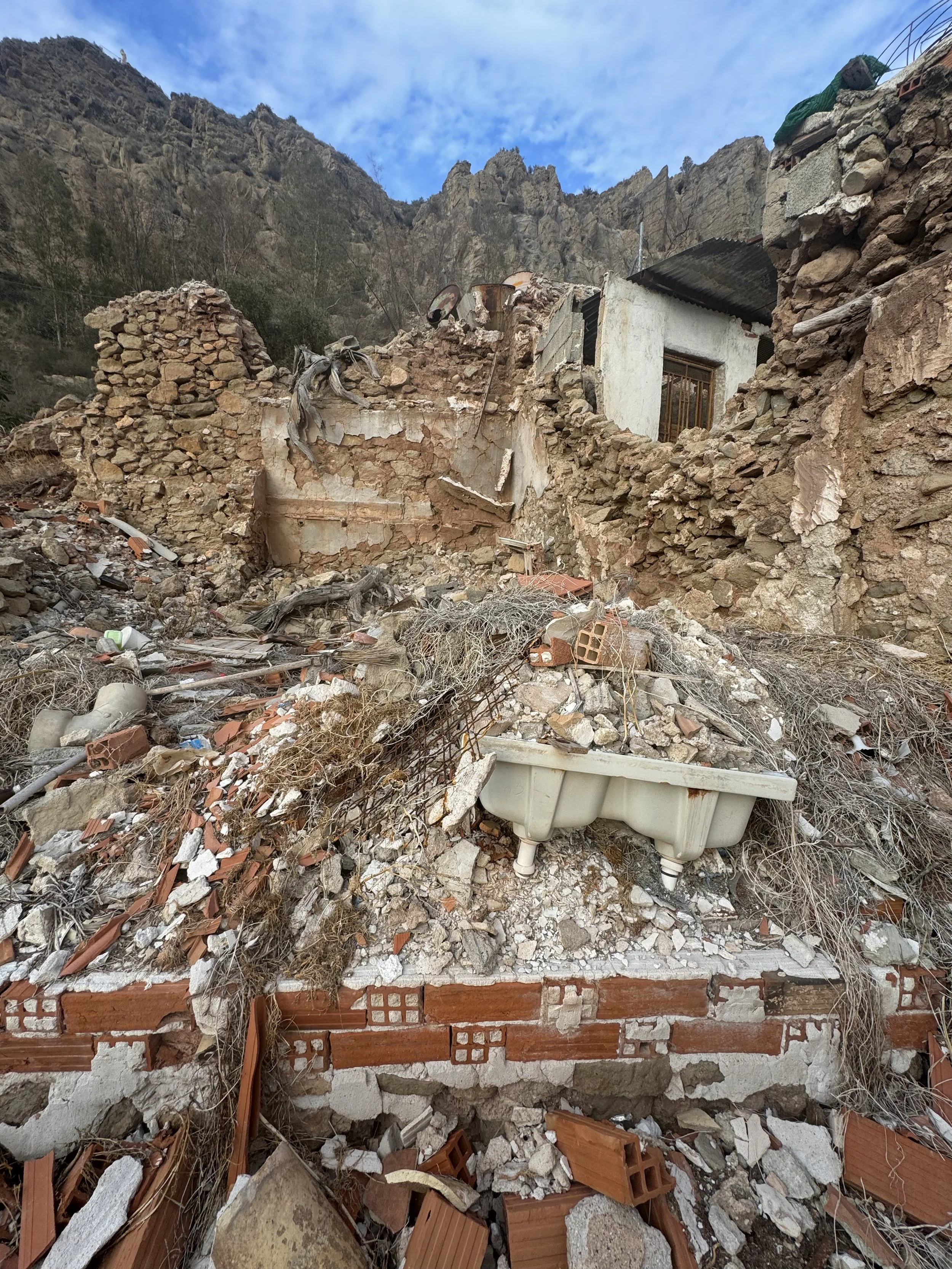
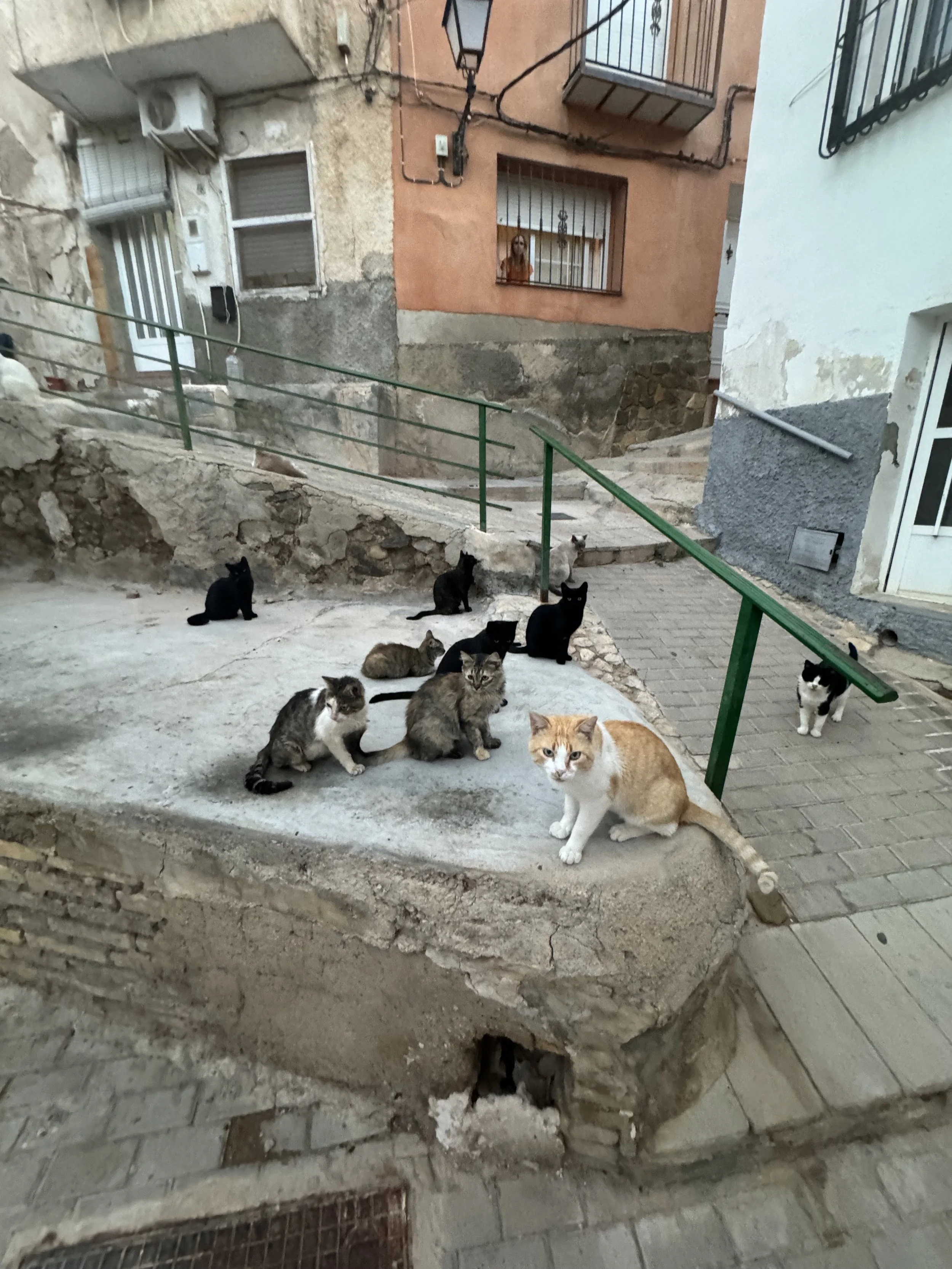
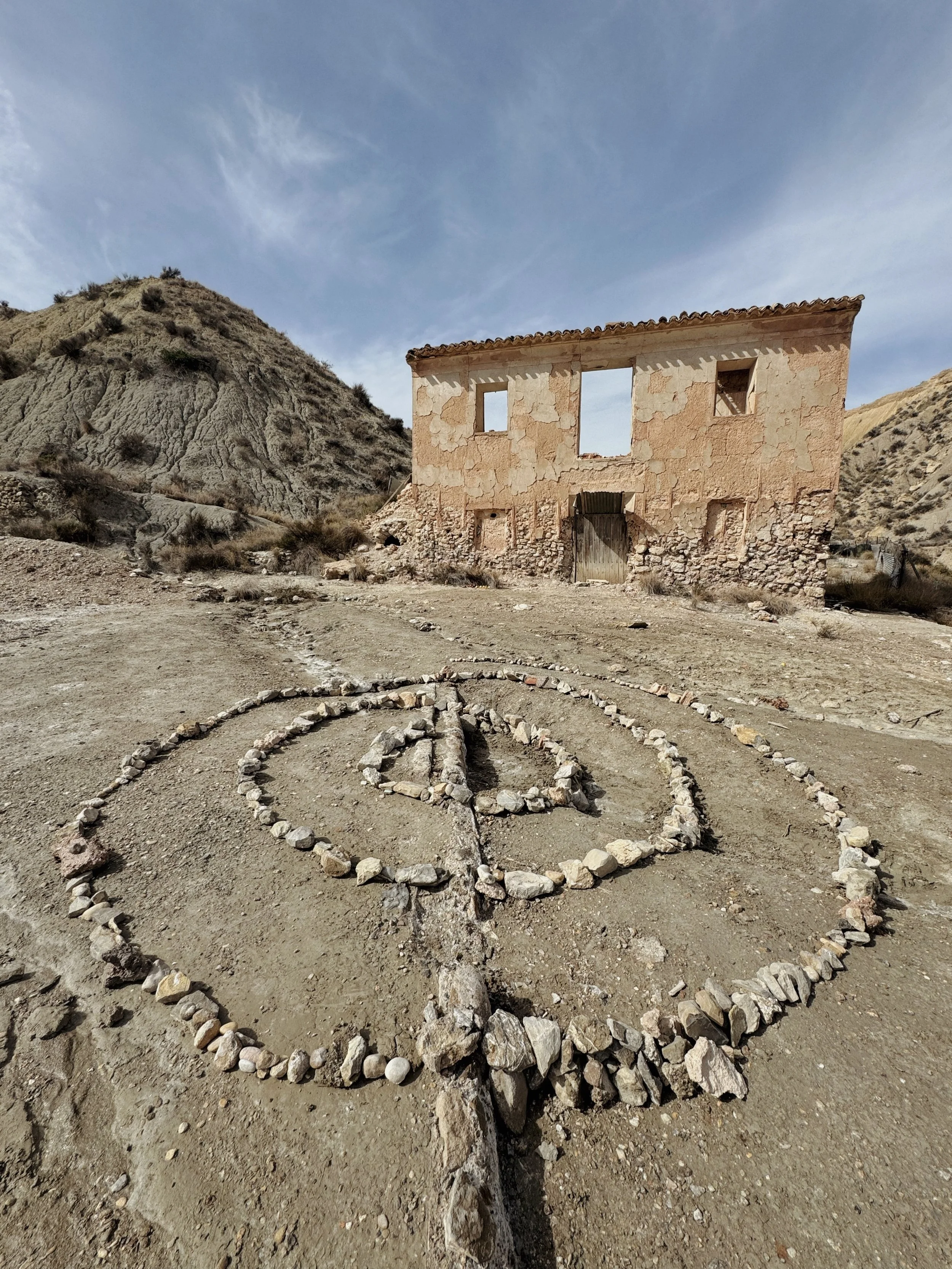
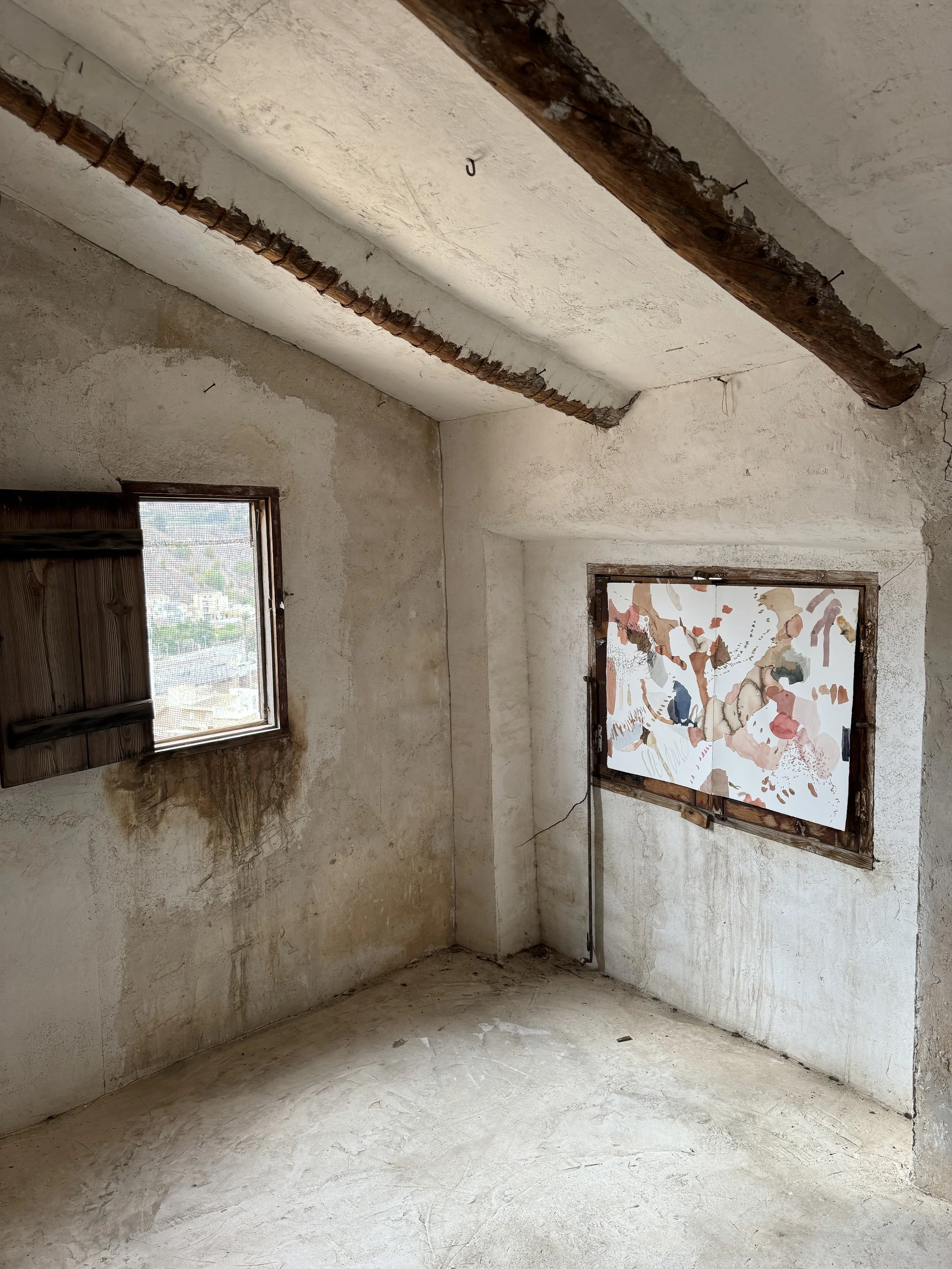
In the town where t’s occupants appear to move slower, the overall sense of times seems to be in flux and an end feels imminent: there is a looming sense of temporariness. It urges me to experience it before it turns into something else. There is not clear, distinctive line between the crumbling mountains and the crumbling buildings. Poorly built by the hands of past generations, these structural stone shells should not be mistaken for important relics. They now only provide shelter for stray cats to hide.
The land is changing. Crumbling and falling apart — the earth, the houses, and me.
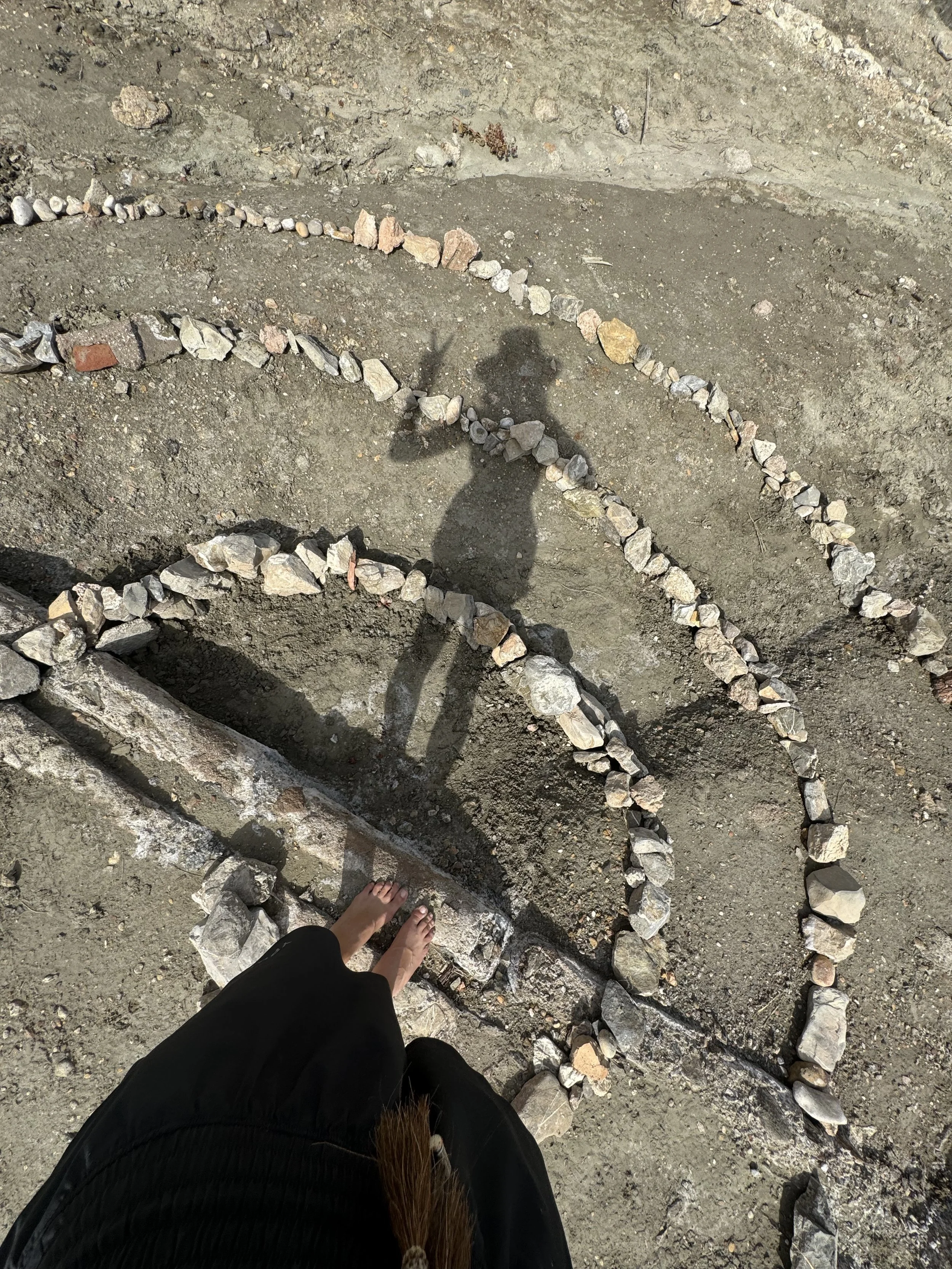
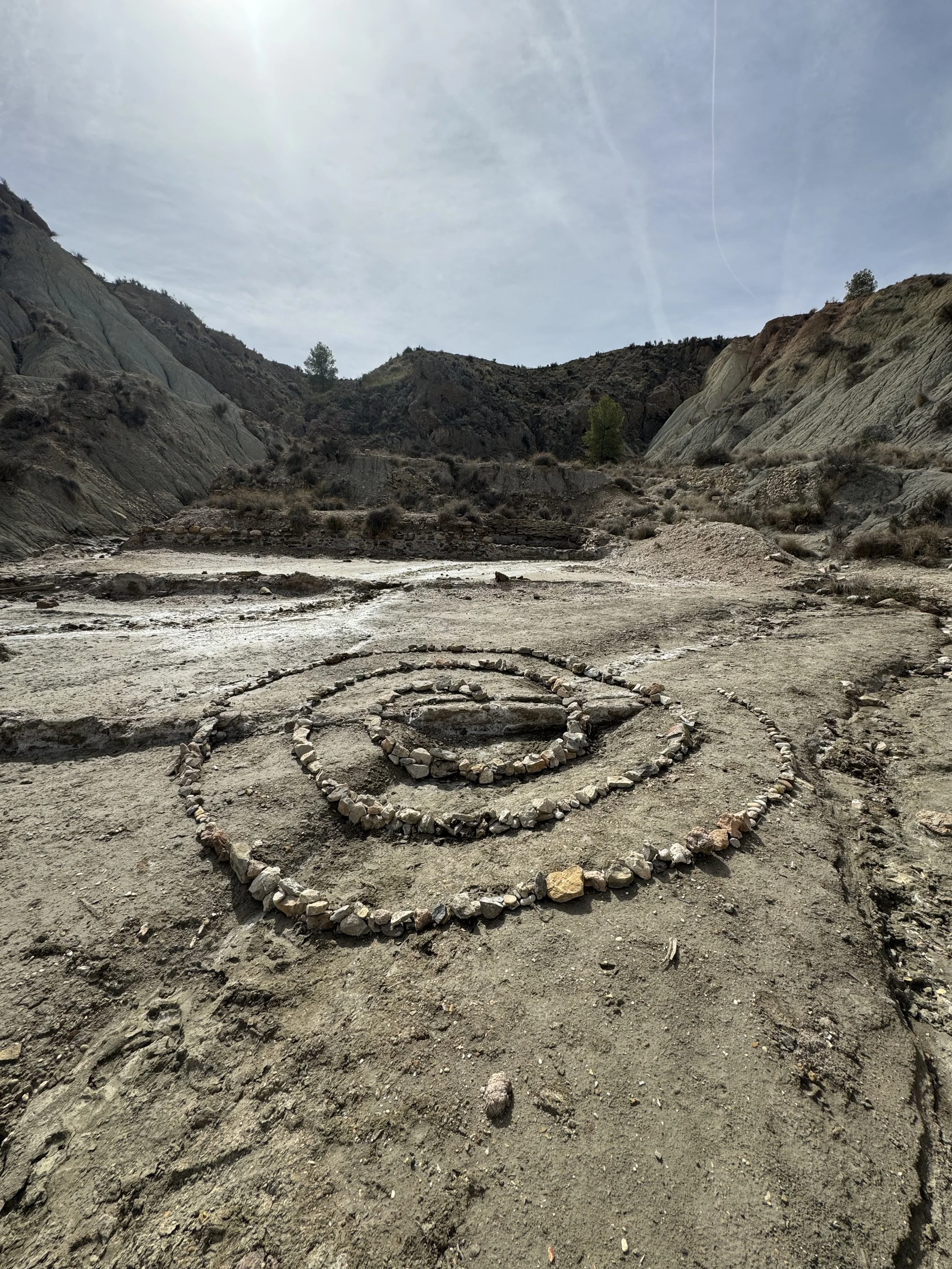
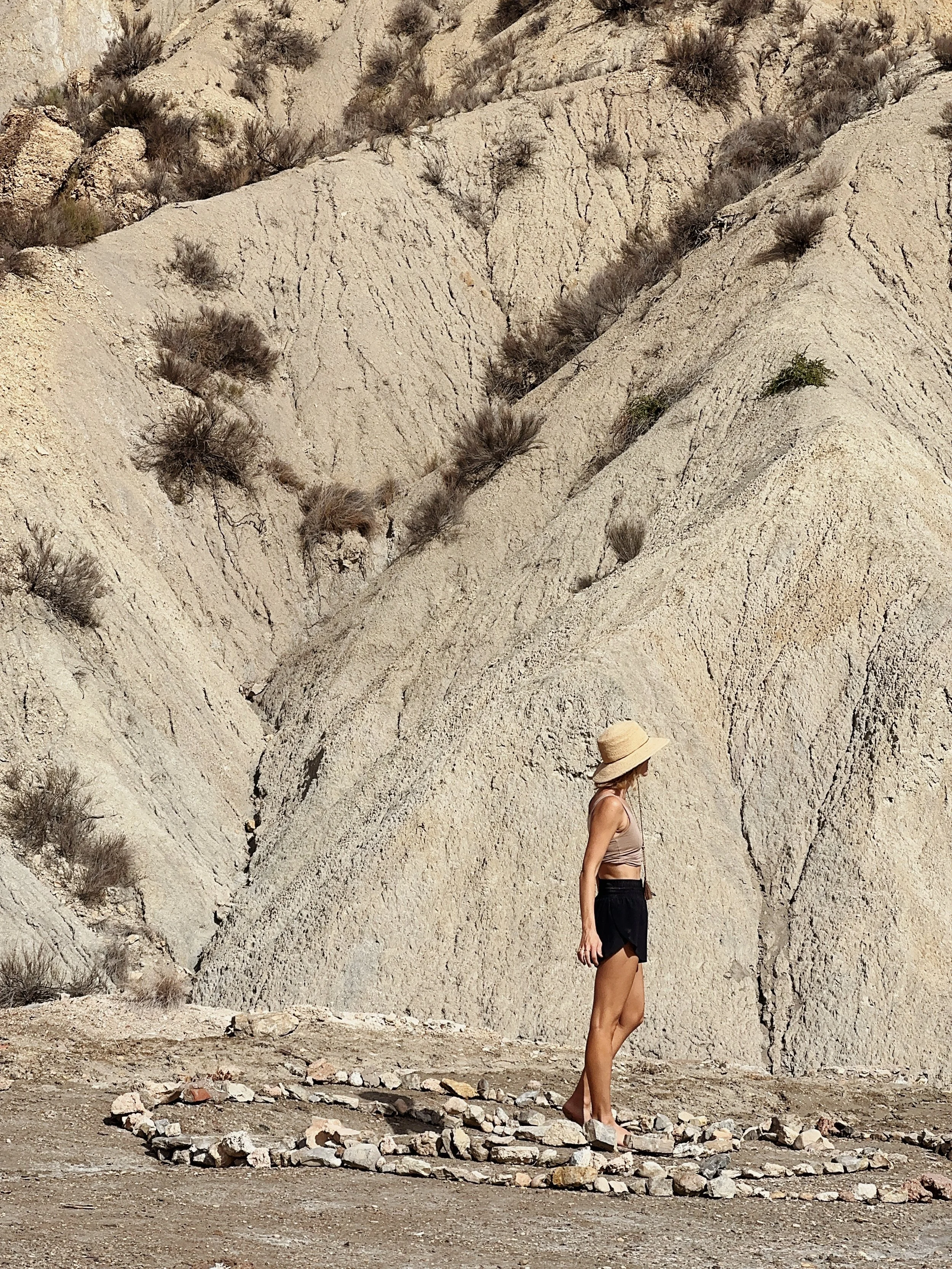
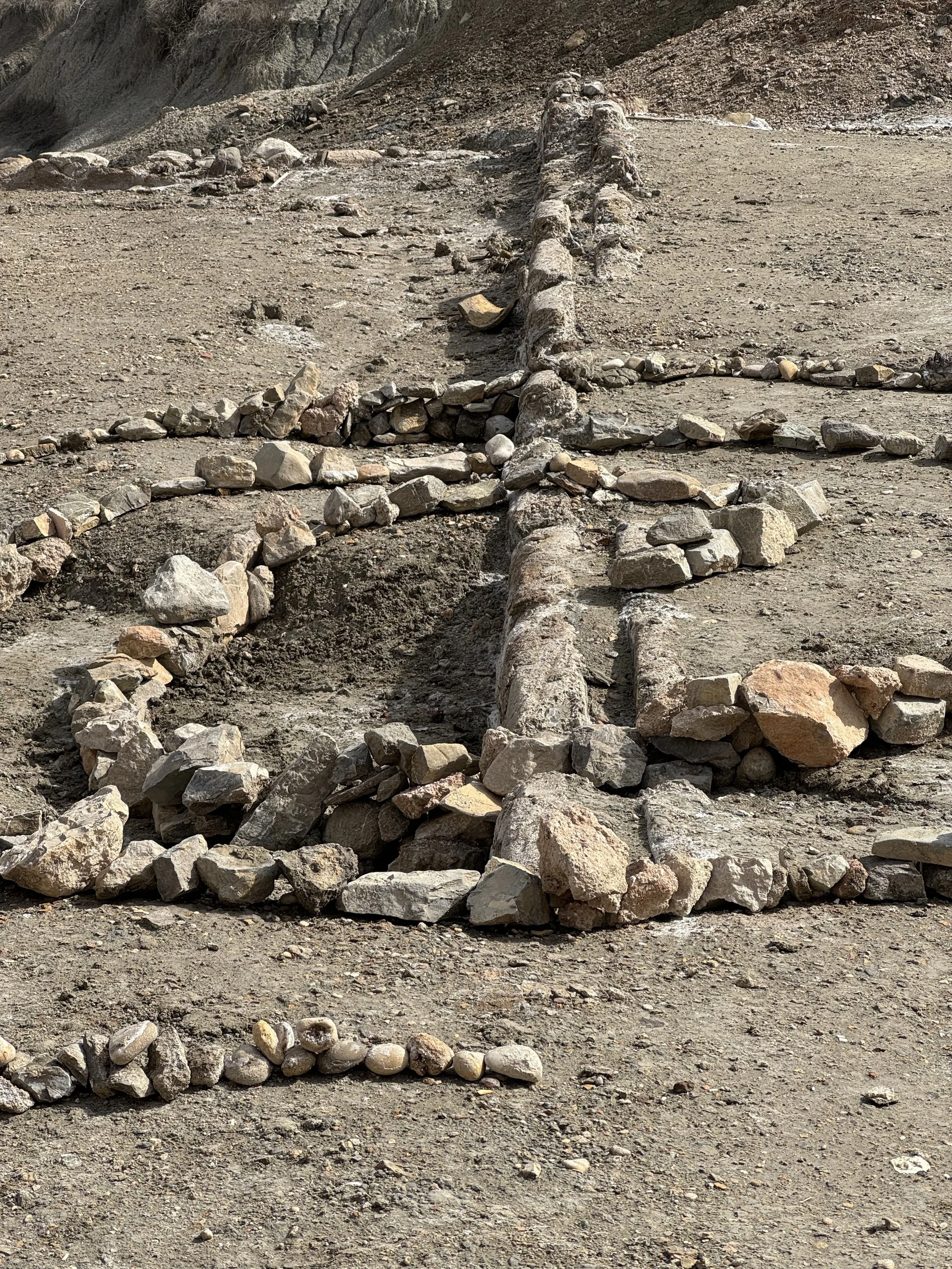
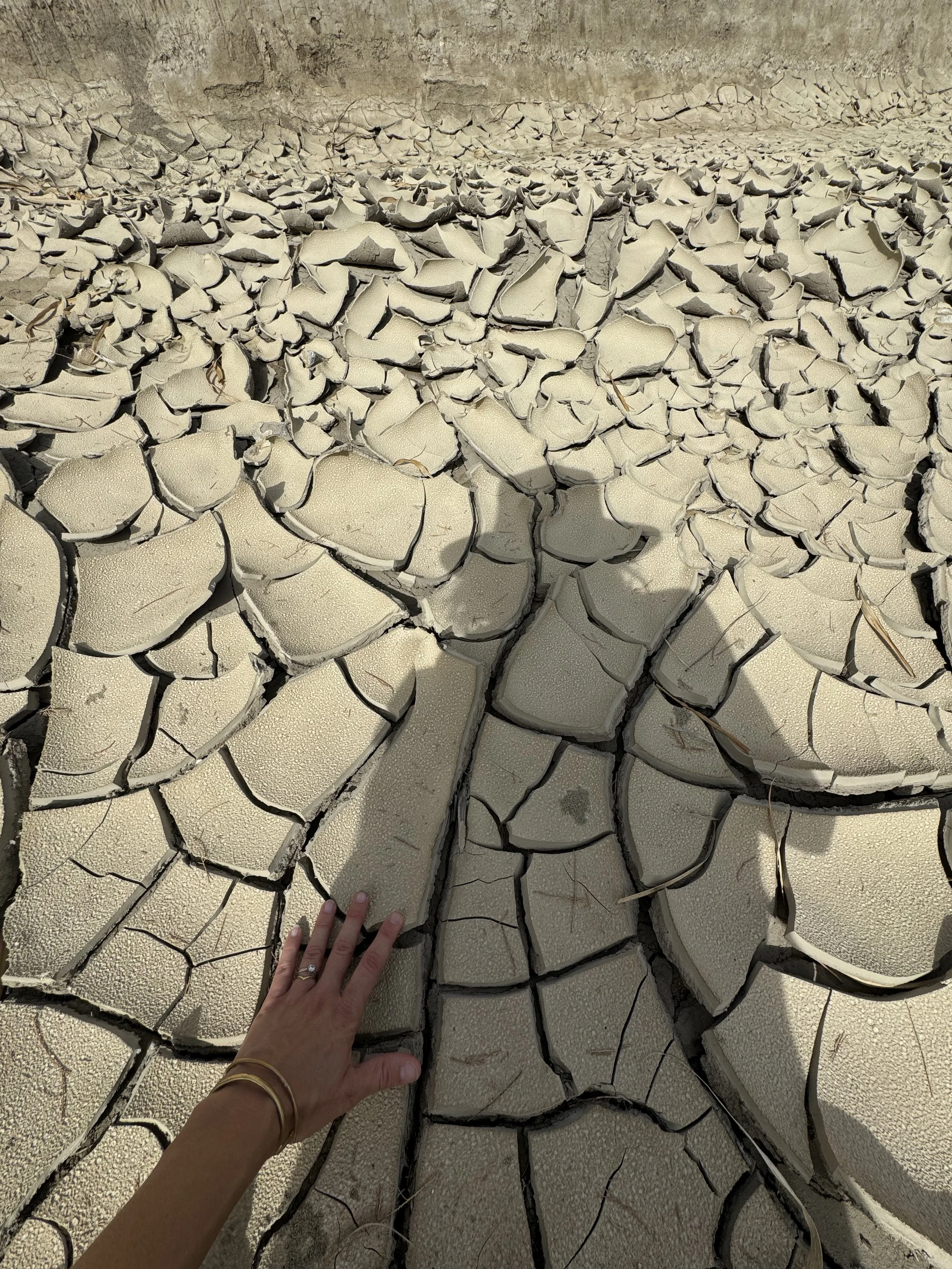
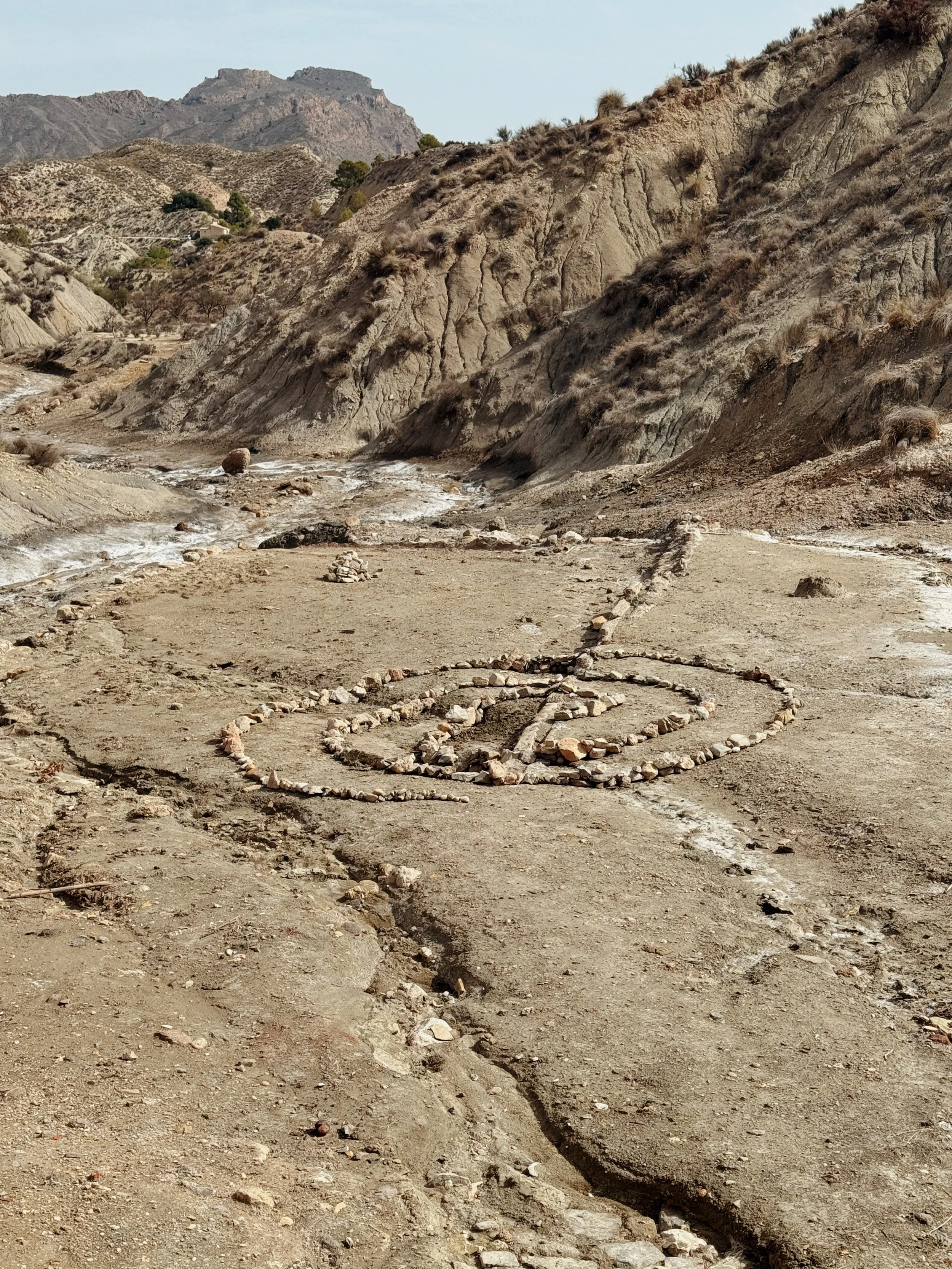
I spent many hours by myself, in the salt flats, Los Salinas. There, I piled rocks into a spiral and I marked my bare footprints in the mud.
I had become very affected by my surroundings: I had been carrying around a heavy sac of obsessive feelings that sat in my throat; my being felt like it had been swallow up by the tunnel vision to which I gazed. I could be described as spiralling — a cycle of negative thoughts and emotions that in succession worsen over time. The spiral symbolizes transformation and growth. I was on a journey that was taking a curving path into unknown lands.
In Buddhist culture the spiral represents a path to enlightenment. The spiral is woven around you, connected to your human spirit. The motif is a reoccurring shape found in nature. Most often referenced with the changing of seasons, and the sequence of life: birth, growth, death. The repetitive activity of collecting and piling the rocks was therapeutic, moving my mind to monotonous tasks. With each layer, you are brought deeper, broadening in complexity. Environmental Artist Andy Goldworthy, worked with organic materials to create circles, lines, and spirals in his work, because they were shapes that already existed in nature. He wanted his work to look like it was a part of the natural landscape. By sourcing material from the land, such as the rocks scattered around the salt flats, nature’s capacity for transformation is highlighted. The crumbling rocks have a temporal quality and emphasize the fleeting of time, and the evolution of matter.
Maybe others will find them and observe my presence? And maybe they will all be washed away, like I was never there? Either way, the land has reshaped me. When I was done, I sat in silence, under the blue sky, and I wrote this text about Blanca.
Artist Residency: AADK Spain, Blanca, Spain
October, 2024